
Building Healthy Soil Naturally
One of the first realities I faced while planning Beagle Rock Farms is that everything depends on the soil. I can’t afford to fight poor soil year after year with expensive synthetic inputs. That’s why regenerative soil management has become central to the entire plan.
Regenerative farming treats soil as a living system full of microbes, fungi, and organic matter rather than just a dirt medium to hold plants. After months of research from Texas, here’s what I’m learning about fixing common UK soil problems naturally and affordably.
Why Soil Health Is Make-or-Break for a New Small Farm
UK soils are incredibly varied. Many areas in northern England, including parts of County Durham where we plan to settle, have heavy clay that compacts easily or lighter soils that drain too fast and lose nutrients. Decades of conventional farming have left many fields low in organic matter, with locked-up nutrients and poor structure.
For someone starting with limited capital, improving soil biology is one of the highest-ROI things you can do. Healthy soil holds more water during droughts, drains better during heavy rain, cycles nutrients efficiently, and grows stronger plants that need fewer interventions. This directly supports the tight budget and five-year timeline I agreed to with my wife.
Reading the Soil and Avoiding Quick Fixes
A classic example I keep coming back to is low magnesium. Many new growers immediately reach for Epsom salts. While that can give a short-term boost, regenerative thinking asks why the magnesium is unavailable in the first place. Often it’s tied to pH imbalance. If the soil is too acidic or alkaline, nutrients get locked up no matter how much you add.
The proper starting point is always a professional soil test. Multiple samples across the planned fields give you a clear picture of pH, major nutrients, and organic matter levels. Once you have that data, you can make targeted amendments instead of guessing.
Practical Regenerative Fixes That Fit a Small Budget
Building soil health starts with organic matter. Compost is the single best all-round amendment. I plan to create our own on-site using farm waste, kitchen scraps, wood chips, and cover crop residues. Well-made compost feeds the soil life, improves structure, and slowly releases nutrients exactly when plants need them.
For compaction common in clay soils, I’m focusing on no-till or minimum-till methods combined with deep-rooted cover crops like daikon radish, clover, and rye. These plants naturally break up hard layers, add organic matter when chopped and dropped, and some (like clover) fix nitrogen from the air.
Rock dust, particularly basalt or glacial rock dust, is another affordable slow-release option that remineralizes depleted soils with trace elements. A modest application can last for years.
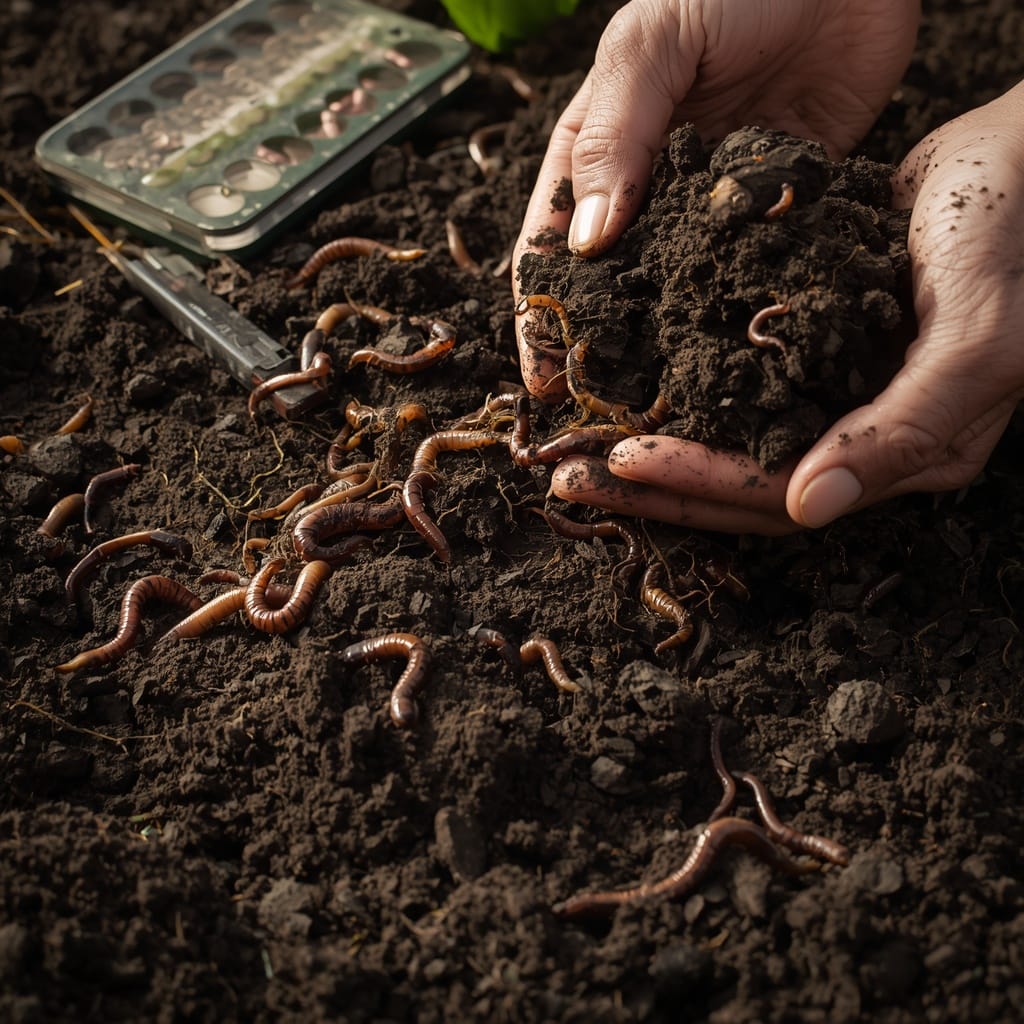
Worm castings and compost tea offer quick, biology-rich boosts. Both can be produced in small batches at home. Compost tea, brewed and aerated, multiplies beneficial microbes and makes an excellent foliar spray that helps plants absorb nutrients through their leaves.
For soft fruits, maintaining the right pH range (generally 5.5–6.5) while steadily increasing organic matter has been a key focus of my planning. Mulching with wood chips or straw also conserves moisture and feeds soil life as it breaks down.
How This Fits the £20k Challenge
Because the budget is tight, the strategy is to prioritize on-site solutions first: composting, cover cropping, and chop-and-drop mulching. Purchased inputs will be used sparingly and strategically — perhaps a few tonnes of quality compost to kick-start the worst areas. Integrating chickens and quail later will add natural manure, closing another loop.
This isn’t a quick fix approach. It’s a long-term investment that should reduce input costs over the five years while building resilience against UK weather extremes.
The Evidence and Why It Matters
Multiple long-term studies, including work from the Rodale Institute and UK field trials, show that regenerative methods can significantly increase soil organic carbon, improve water retention, and often match or exceed conventional yields once the system matures. In a country facing more frequent floods and droughts, building this kind of resilience is practical risk management.
I don’t have a farm yet, but I’m documenting every research step, soil test plan, and decision so the journey stays transparent. When we get on the land in 2027, I’ll share the actual before-and-after results, good and bad.
-Feniks
Related Articles:
What Is Regenerative Farming? A Clear Guide for Beginners
Regenerative Farming Myths Debunked
Reference List
- Rodale Institute – Regenerative Organic Agriculture Research: https://rodaleinstitute.org/
- Soil Association UK – Soil Health Resources: https://soilassociation.org/
- DEFRA / AHDB Soil Management Guidance: https://ahdb.org.uk/
- UK Cover Crop and Composting Guides (various university extension resources