
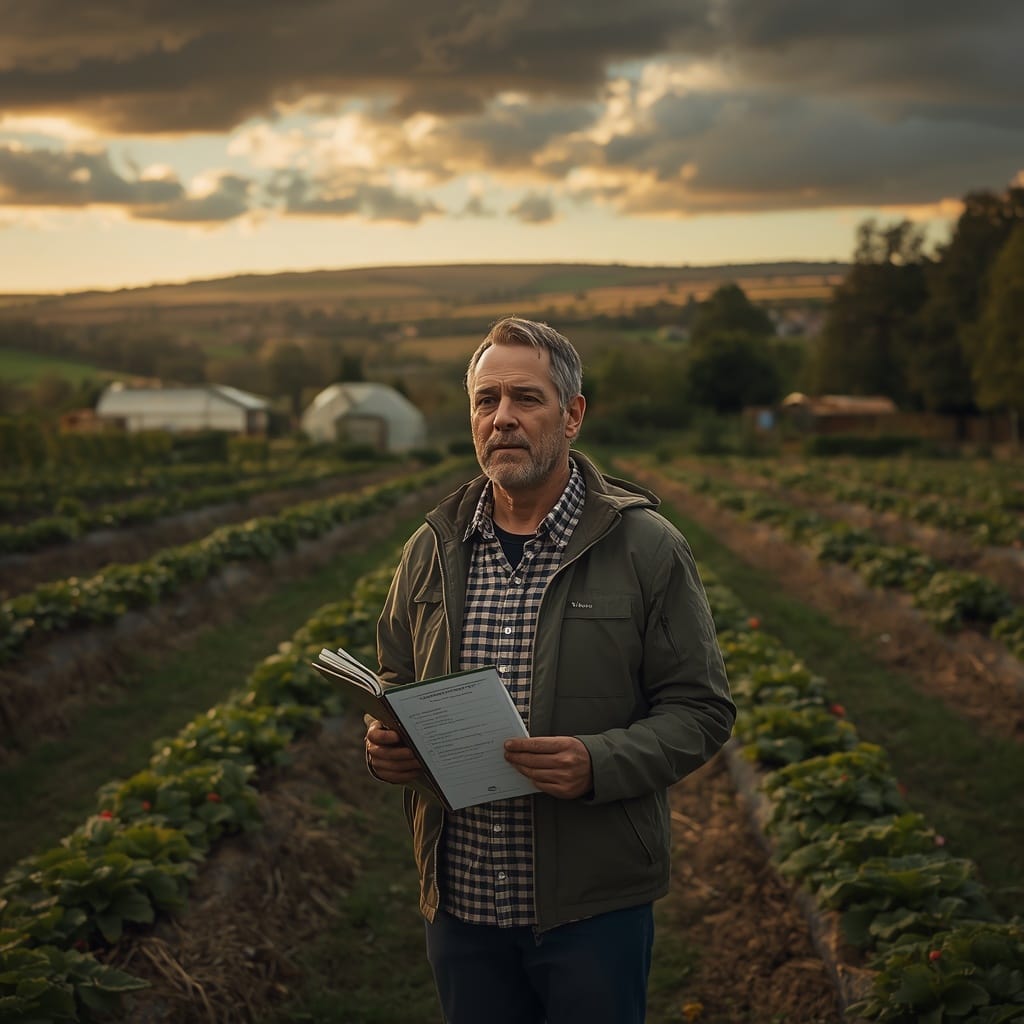
Starting any farm involves risk. Starting a small regenerative soft fruit farm at 58, in a new country, with a strict is even more challenging.
While I’m optimistic about Beagle Rock Farms, I’ve been spending serious time thinking about what could go wrong. Ignoring risks doesn’t make them disappear,it only leaves you unprepared when they appear. In this article, I’m sharing how I’m approaching risk identification, assessment, mitigation, and contingency planning as I prepare for the move to the UK.
This isn’t about fear. It’s about facing reality with open eyes so the farm has the best possible chance of surviving the inevitable setbacks.
Risk Identification: Seeing the Real Dangers Clearly
The first and most important step is simply seeing the risks honestly. Many new farms fail not because of bad luck, but because the founders didn’t identify the biggest threats early enough.
For me, the major risks include:
- Extreme weather and crop failure
- Financial shortfalls on a very limited budget
- Market and sales challenges
- Regulatory and planning permission problems
- Personal health and burnout at my age
Identifying these risks early helps me make better decisions during land selection, infrastructure planning, and budgeting. For example, knowing how vulnerable soft fruit can be to late frosts and heavy rain pushes me to prioritise good drainage and crop protection from day one.
Risk Assessment: Weighing Likelihood and Impact
Once risks are identified, I try to assess both how likely they are and how serious the consequences would be if they occurred.
Some risks, like a single difficult weather year, are fairly likely but survivable with good planning. Others — such as a major disease outbreak combined with poor sales in the first two years — are less likely but could be catastrophic given the tight £20k budget.
Right now, financial risk and personal health risk rank highest for me. At 58, I have to be realistic about how much physical and mental stress I can handle long-term without burning out or getting injured. A major financial setback early on could end the entire project before it really begins.
This assessment process helps me decide where to focus limited time and money. Not all risks deserve the same level of attention.
Risk Mitigation: Turning Awareness into Practical Action
Awareness alone isn’t enough. The real work is in mitigation, actually doing things to reduce either the likelihood or the impact of the risks.
My current mitigation strategies include:
- Keeping the first two years extremely lean and disciplined with spending
- Maintaining a separate emergency fund outside the main £20k startup budget
- Planning multiple revenue streams (PYO, honey, value-added products, possible SFI payments) so we’re not dependent on any single source
- Prioritising hardy varieties, good site selection, and basic crop protection (polytunnels, netting)
- Building soil health as quickly as possible to improve natural resilience
Mitigation isn’t about eliminating risk, that’s impossible. It’s about making the risks manageable so the farm has the best chance of surviving difficult periods.
Contingency Planning: Preparing for the Worst-Case Scenarios
Even with good mitigation, things can still go wrong. That’s why I’m also building contingency plans — clear “if this happens, then this is what we do” responses.
Financial Contingency If revenue is much lower than expected in the first two years, the plan is to draw from the emergency fund while immediately cutting non-essential spending. We would delay expansion, focus on the most profitable crops (likely strawberries for PYO), and possibly take on some part-time work if needed to keep the project alive.
Weather or Crop Failure Contingency If a major weather event or disease wipes out a large portion of the harvest, we accept the loss, learn from it, and replant the following season. The emergency fund would cover basic living and operational costs while we recover. I’m also planning to start with staggered planting dates and multiple varieties to spread risk.
Personal Health Contingency If I experience injury or burnout, the plan is to scale back physical work immediately. My wife would take on more responsibility where possible, and we would bring in seasonal help earlier than planned. In a worst-case health scenario, we would reduce the farm to a smaller, more manageable size rather than push through and risk long-term damage.
Complete Failure Contingency If everything goes wrong in the first three years (major crop failure + poor sales + health issues), the honest contingency is to accept the loss, sell what assets we can, and regroup. The farm would still exist as a smaller learning project rather than a full business, and the experience would still be valuable for future decisions.
These contingency plans aren’t pessimistic, they’re realistic. Having them in place reduces panic if things don’t go as hoped and gives me more confidence to move forward.
Insurance Considerations
Insurance is one important piece of the mitigation and contingency puzzle. For a small regenerative farm with visitors (PYO), the key policies I’ll need include public liability, buildings and contents, and possibly crop or business interruption cover. I plan to work with a specialist farm insurance broker rather than a generic provider to make sure the cover actually matches our needs.
Conclusion
Risk is an unavoidable part of starting a small regenerative farm. The difference between success and failure often comes down to how honestly and systematically you identify, assess, and mitigate those risks.
Risk assessment is not a one-time thing. Risks change, conditions change, and your ability to deal with the impact can change over time. What feels manageable at the beginning may look very different after a tough first season or an unexpected health issue. That’s why I’m treating this as an ongoing process, regularly revisiting the risks, adjusting the mitigation strategies, and updating the contingency plans as the farm develops.
I don’t expect everything to go smoothly with Beagle Rock Farms. What I do expect is to face problems with eyes open, learn from them quickly, and keep the farm moving forward. That mindset, more than any perfect plan, is what I’m relying on most.
If you’ve started a small farm (regenerative or otherwise), I’d genuinely value hearing about the risks you faced and how you handled them. What surprised you the most? What contingency planning worked (or didn’t) for you? Leave a comment below. Sharing real experiences helps all of us.
References
- NFU Mutual – Farm Insurance Guidance
- GOV.UK – Business Insurance for Farms
- Rural Payments Agency – Guidance on environmental schemes and compliance
- Various small farm risk management resources and case studies