Why Soft Fruit Farming Makes Perfect Sense for a Small Regenerative Farm
When I started planning Beagle Rock Farms, I spent a long time comparing different farming options. I looked at traditional arable crops, large orchards, vegetable box schemes, and livestock-focused systems. In the end, I decided that a diversified soft fruit system — built around strawberries, raspberries, blueberries, and blackcurrants — was the best foundation for us.
This choice wasn’t made lightly. It came from practical financial realities, regenerative principles, and a clear vision of how I want the farm to operate.
Moving Away from Monoculture Risk
One of the strongest lessons I took from my years in traditional farming is how dangerous it can be to rely on a single crop. A bad season, pest outbreak, or market price crash can devastate everything. Soft fruit farming naturally supports a more balanced and resilient model.
Different berries ripen at slightly different times throughout the season. Early strawberries give us a head start, followed by raspberries, then blueberries and blackcurrants later in the summer. This natural staggering spreads the workload, reduces financial risk, and allows us to build a more complex, living farm ecosystem rather than a simplified monoculture.
Pick Your Own as an Early Revenue Engine
Pick Your Own (PYO) will be an important part of our early strategy. It offers something many new farms struggle to achieve — relatively quick cash flow while the farm is still establishing itself. Customers come to the farm, pick their own fruit, and often leave with a real connection to the place. This direct relationship is incredibly valuable for building a loyal customer base from day one.
From Field to Kitchen – Creating Multiple Income Streams
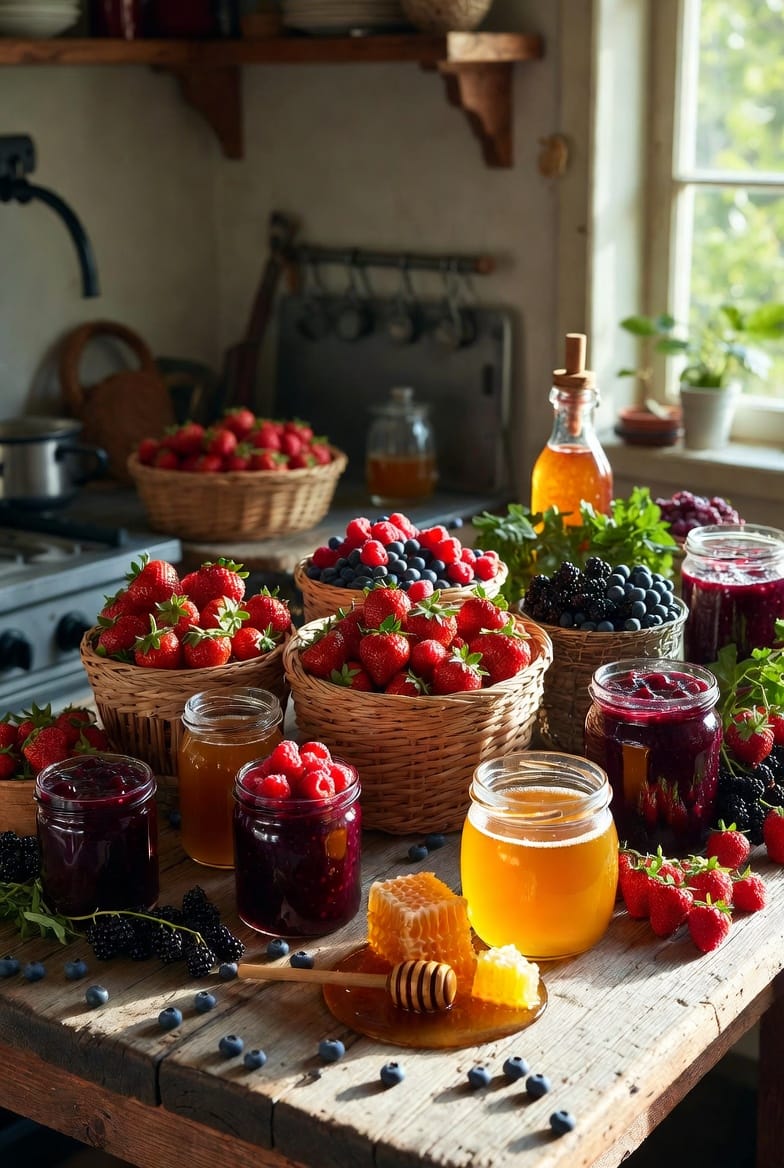
What really excites me about soft fruits is how well they transform into higher-value products. Excess fruit and second-grade berries can be turned into premium jams, jellies, sauces, marinades, salsas, and chutneys. We also plan to create honey-sweetened preserves and infused honeys using our own honey.
This approach allows us to generate income throughout the year, not just during the short harvest season. A single kilo of strawberries can become fresh sales, PYO experiences, or several jars of premium jam. That kind of diversification is essential when working with a limited £20,000 startup budget.
We will also grow a selection of supporting vegetables and herbs specifically chosen to complement the fruit in both the field and the kitchen.
The Central Role of Bees
At the very heart of this entire system are the bees. They will be the true drivers of Beagle Rock Farms.
We plan to establish strong, healthy bee colonies not only for honey production but because excellent pollination is critical for soft fruit yields. Good pollination leads to bigger, sweeter, better-formed berries. Strong bee activity can make a significant difference in both the quantity and quality of our harvest.
The honey we produce will become another important income stream and a key ingredient in many of our value-added products. The bees also support the wider ecosystem by encouraging diverse flowering plants and wildflower margins, which benefits soil health and natural pest control.
How Everything Works Together
This is what I find most satisfying about the model. The different elements reinforce each other. The soft fruits provide the main crop and PYO experience. The value-added products extend our income beyond the short harvest season. The bees drive pollination and honey production. The supporting vegetables and herbs add diversity and unique flavours. Chickens and rabbits contribute natural fertility while helping manage pests and weeds.
It becomes a living, interconnected system rather than several separate enterprises. This kind of thoughtful diversification is exactly what I believe gives a small regenerative farm the best chance of long-term success — especially when starting with a limited budget.
This is the kind of farm I want to build: productive, resilient, and deeply connected to the land.
References & Further Reading: