What the Evidence Actually Shows
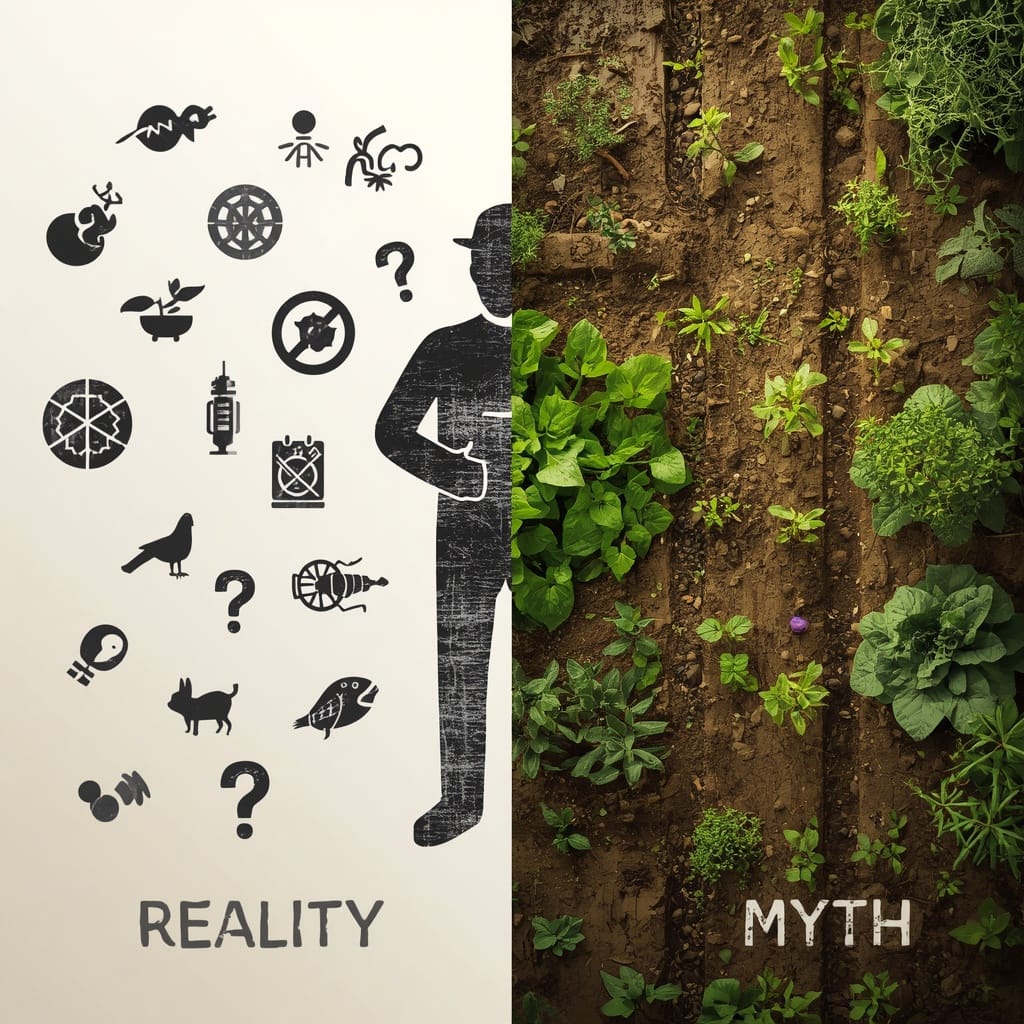
Regenerative farming has gained significant attention in recent years, but it has also attracted a wave of myths and oversimplifications. Whether you’re new to the topic or have been following the movement for a while, it’s common to encounter conflicting claims about what regenerative farming is and what it can achieve.
In this article, I’m examining some of the most common regenerative farming myths and looking at what the evidence and real-world experience actually show. These aren’t just theoretical debates — they directly influence the decisions farmers make about their land and businesses.
Myth 1: Regenerative Farming Is Just Organic Farming with a New Name
Fact: While there is overlap between the two, regenerative farming and organic farming are not the same.
Organic farming is primarily defined by what it prohibits — synthetic pesticides, herbicides, and fertilizers. Regenerative farming, on the other hand, is defined by what it actively seeks to improve: soil biology, biodiversity, water cycles, and overall ecosystem function.
It is possible to practice regenerative farming while still using some synthetic inputs during the transition. It is also possible to farm organically without meaningfully improving soil health. The two approaches have different goals and different methods.
Myth 2: You Can’t Scale Regenerative Farming
Fact: Regenerative principles can be applied successfully at larger scales, although the methods often need to adapt as farm size increases.
Many commercial operations managing hundreds or even thousands of acres use regenerative practices such as cover cropping, reduced tillage, diverse rotations, and adaptive grazing. However, scaling regenerative farming usually requires stronger management systems, better data, and different tools than small-scale operations.
The idea that regenerative farming only works on small or hobby farms is not supported by real-world evidence.
Myth 3: Regenerative Farming Means Zero Tillage Forever
Fact: Many regenerative farmers use reduced or strategic tillage rather than permanent no-till.
While minimizing soil disturbance is a core principle, some situations benefit from occasional, thoughtful tillage — such as relieving compaction, terminating certain cover crops, or incorporating amendments. The goal is long-term soil health, not ideological purity.
Myth 4: Regenerative Farming Doesn’t Use Any Inputs
Fact: Most regenerative farms still use inputs — they simply aim to use fewer external synthetic inputs over time by improving soil biology and nutrient cycling.
Compost, manure, biological products, and sometimes targeted fertilizers or soil amendments are commonly used. The focus is on gradually reducing reliance on costly and environmentally damaging inputs rather than eliminating all inputs entirely.
Myth 5: You Need Livestock to Practice Regenerative Farming
Fact: Livestock is a powerful tool in many regenerative systems, but it is not required.
Many successful regenerative farms — particularly in horticulture and arable cropping — operate effectively without animals. Livestock can accelerate soil improvement and create additional income streams, but it is not a mandatory component of regenerative farming.
Myth 6: Regenerative Farming Will Quickly Solve Climate Change by Sequestering Huge Amounts of Carbon
Fact: While regenerative practices do build soil organic carbon, the speed and scale of sequestration are often overstated.
Carbon gains vary significantly depending on climate, soil type, management, and starting conditions. In many cases, sequestration happens relatively slowly and can be reversed if practices change. Regenerative farming is one helpful tool for climate mitigation, but it is not a quick or complete solution on its own.
Myth 7: Regenerative Farming Is Only for Small Farms or Hobbyists
Fact: Regenerative practices are being successfully applied across a wide range of farm sizes, including medium and large commercial operations.
While smaller farms may find it easier to manage complexity and diversity, many larger farms are adapting regenerative principles using technology, data, and different management approaches. Scale does not automatically disqualify a farm from using regenerative methods.
Myth 8: Regenerative Farming Is Anti-Science or Anti-Technology
Fact: Many regenerative farmers actively use science, data, and technology.
Soil testing, biological monitoring, precision tools, data analytics, and biological products are commonly used in regenerative systems. The approach focuses on working intelligently with natural systems rather than rejecting science or technology.
Myth 9: Regenerative Farming Is Too Expensive for Most Farmers
Fact: While there can be transition costs in the early years, many farmers eventually reduce their overall costs through lower fertilizer, pesticide, and fuel use.
The bigger barriers for many farmers are usually knowledge, risk during the transition period, and access to good technical support — not just the upfront financial cost.
Myth 10: Regenerative Farming Is Easy
Fact: Regenerative farming often requires more knowledge, observation, and adaptive management than conventional farming.
It is mentally demanding, especially during the transition when results can be slower and less predictable. Success usually depends on continuous learning and adjustment rather than following a simple formula.
Myth 11: All Regenerative Farmers Agree on the Same Practices
Fact: There is no single, universally agreed-upon definition or set of practices for regenerative farming.
Methods vary significantly depending on climate, soil type, farm size, crops, and goals. What works well in one region or system may not be suitable in another. This diversity is both a strength and a source of ongoing discussion within the movement.
Conclusion
Regenerative farming offers a promising path forward, but like any significant shift in agriculture, it has attracted its share of myths and oversimplifications. Understanding what the evidence actually shows — rather than relying on simplified claims — helps farmers make better decisions for their specific land and circumstances.
The reality is more nuanced than many headlines suggest. Regenerative farming is neither a magic solution nor an impossible dream. Like most meaningful changes in farming, it requires knowledge, patience, adaptation, and realistic expectations.
If you’re exploring regenerative practices, I encourage you to look beyond the myths and focus on what actually works in your context.
Have you come across any of these myths in conversations or online? Which ones have you found most common or persistent? Leave a comment below — I’d be interested to hear your experience.
References
- Rodale Institute – Farming Systems Trial
- Soil Association – Regenerative Agriculture Research
- Savory Institute – Holistic Management Studies
- DEFRA – Sustainable Farming Incentive
- Various peer-reviewed studies on soil carbon dynamics and regenerative agriculture (FAO and academic journals)