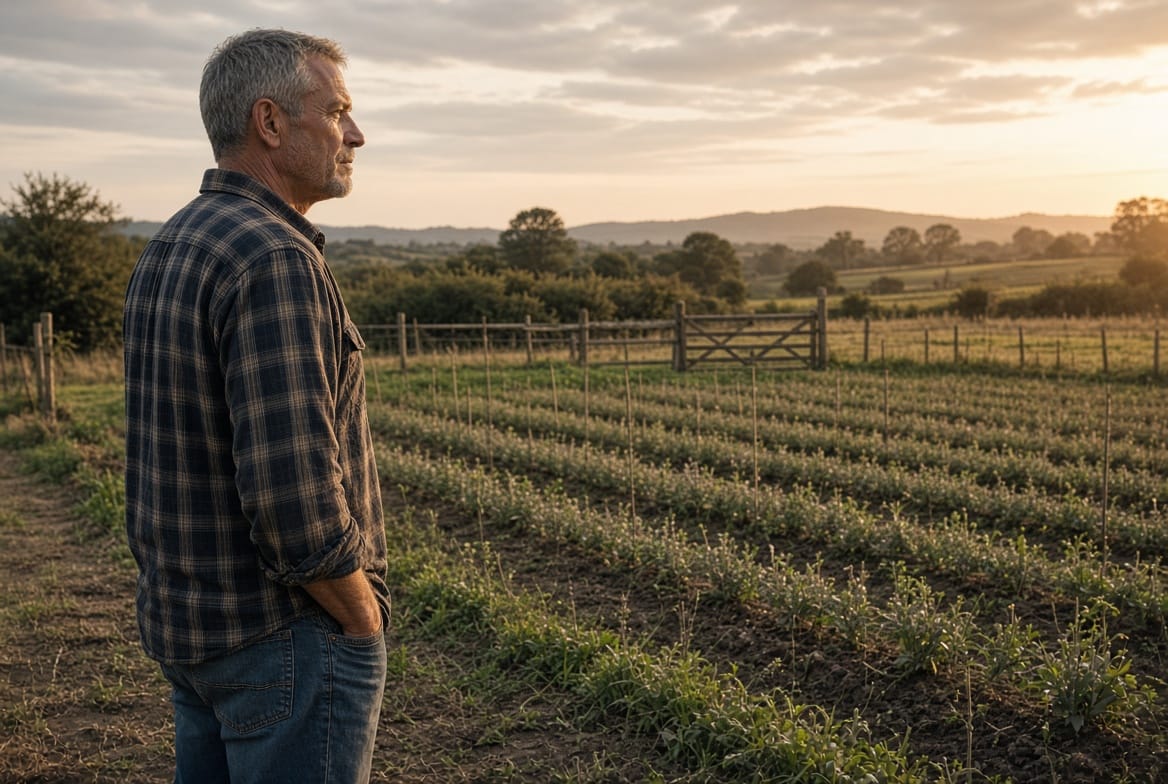
I’m in my late 50s. Not long ago, my wife told me she wanted to move. Starting over in a new place and Starting a small farm later in life was never part of my original plan. I’m in my late 50s. Not long ago, my wife told me she wanted to move. The thought of starting over in a new place and looking for a new career at this age didn’t sit right with me. Because of that, I made her a counter-offer.
I said I would move, but only if I could start a small farm instead of going back into a regular job. She agreed, though she attached clear conditions. Those conditions became what I now call The Challenge.
The Rules of The Challenge
Here are the rules I agreed to follow while starting a small farm later in life:
- Budget The maximum startup budget is $25,000. This amount covers the farm project itself. Land and housing stay separate.
- Timeframe I have five years to complete the challenge.
- What Success Looks Like By the end of Year 5, the project needs to generate enough net income to do two things:
- Cover the following year’s operating costs, and
- Provide an income at least equal to the average individual income in the state where the farm ends up.
- Income and Expenses Every dollar the project brings in counts. Every dollar the project spends also counts.
- Monthly Reporting I will publish a detailed financial update during the first week of every month. The numbers will appear by category.
- Labor Most of the work will come from family. If I need to hire help, that cost will appear as a regular expense.
- Changes Along the Way Plans change. When something significant needs adjusting, I will document it openly here.
Why I’m Starting a Small Farm Later in Life
After a long career in the energy sector, I realized I missed something important. I grew up on a small farm and still remember the satisfaction of working with my hands and seeing the direct result of that effort. Somewhere along the way, that connection disappeared.
This Challenge is my attempt to get it back. I’m not treating it as a hobby or a weekend project. Instead, I’m treating it as a real effort to build something that has to stand on its own with a real budget, a real timeline, and real consequences.
I also want to show that starting a small farm later in life is still possible. Not just talk about it. Actually do it.
What Happens Next
The rules are now set and the commitment is public.
The real work begins from here. Research, planning, hard decisions, and eventually land and the first plantings will all follow. I will record everything here as it happens. The progress, the mistakes, and the numbers.
You’re welcome to follow along.
— Feniks